Built to Last: A Journey Through Fort Myers’ Unexpected Architecture
In southwestern Florida, lush wildlife surrounds a diverse array of design styles.
Nestled into the southwestern corner of Florida, the Fort Myers area is known for its diverse wildlife and endless outdoor activities, from kayaking to bike riding to manatee watching. But the city and the surrounding areas are also home to a fascinating collection of architecture. From ancient manmade shell mounds to striking Spanish Revival facades, the architecture throughout the islands, beaches and neighborhoods of Fort Myers tells a rich and varied story that stretches thousands of years. With this itinerary of the region’s most captivating estates, timeworn landmarks, and visionary structures, you'll experience how each is a testament to the artistry, ambition, and imagination that have shaped this corner of Florida.
1. Edison and Ford Winter Estates
Won't You Be My Neighbor?
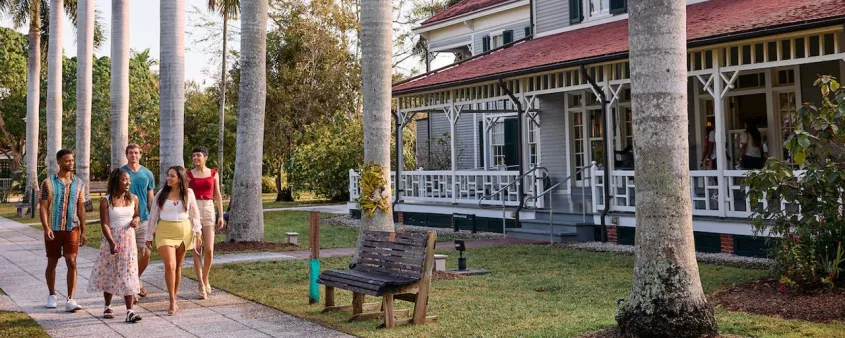
Here’s a fun fact: for a brief period of time during the early 20th century, historical legends Henry Ford and Thomas Edison were neighbors. The two owned adjacent estates, which they used as winter homes, in Fort Myers. Today, the estates have been combined into one museum, which includes sprawling gardens and a 15,000-square-foot (air-conditioned!) museum dedicated to the men’s work. Of course, the buildings themselves are a sight to behold. Both retain much of their original decor; the Ford House was build in the craftsman style, while the Edison home features a wraparound porch and a red-tiled roof that makes for a dramatic contrast to the lush greenery that surrounds it.
2350 McGregor Blvd, Fort Myers, FL 33901
View Website | Open in Google Maps
2. Shangri-La Springs Hotel
Take a Load Off.
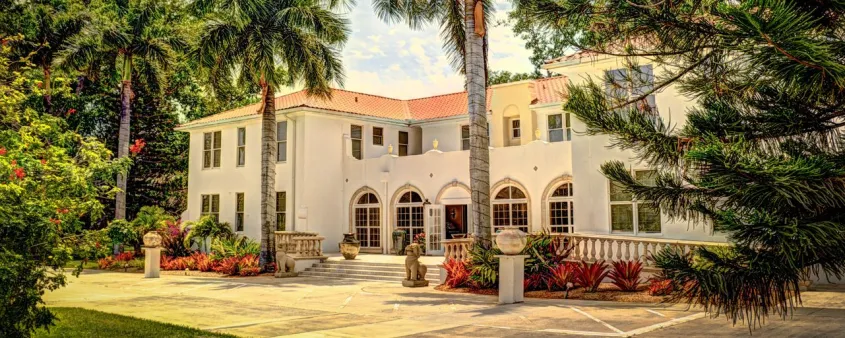
Tucked into 8 acres along a tranquil creek in Bonita Springs is the aptly named Shangri-La, which may be the pinnacle of classic Florida elegance. Built in the 1920s, the property’s design is inspired by the Spanish revival style, with red tiled roofs, white stucco walls, so many windows, and a legion of palm trees surrounding it. The grounds are just as striking as the “Great House” that holds most of the rooms and a restaurant; the spa is in a separate building on the compound. Even if you’re not staying here, you can take a relaxing stroll through the organic gardens, where fountains and many-trunked Banyan trees create an oasis for guests and visitors alike.
27750 Old 41 Rd, Bonita Springs, FL 34135
View Website | Open in Google Maps
3. The Gasparilla Inn
Join the Club.
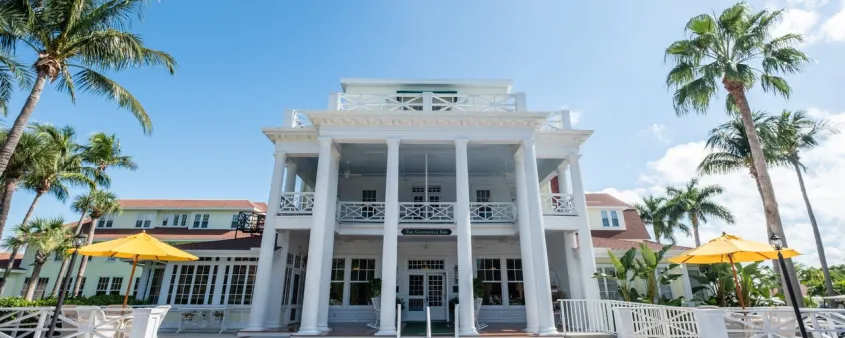
If you’re looking for more of a beach vibe in your historic Florida hotel visit, take the scenic Boca Grande Causeway to The Gasparilla Inn & Club on the northeastern edge of Boca Grande. This grand property is a historic hotel first opened over a century ago, and it’s got the bones to prove it: When you pull up, you’ll be struck by the two-story columns at its entrance. The wooden exterior is painted a gentle butter yellow, balancing grandeur with charm. It’s the beating heart of Boca Grande’s social season, and regulars simply call it “The Inn” between rounds of golf on the Pete Dye-designed course and afternoons sipping drinks on the beach. For most of its history, you could only book rooms by referral, but now, everyone is welcome.
500 Palm Ave, Boca Grande, FL 33921
View Website | Open in Google Maps
4. Mound House
Ancient Shells.
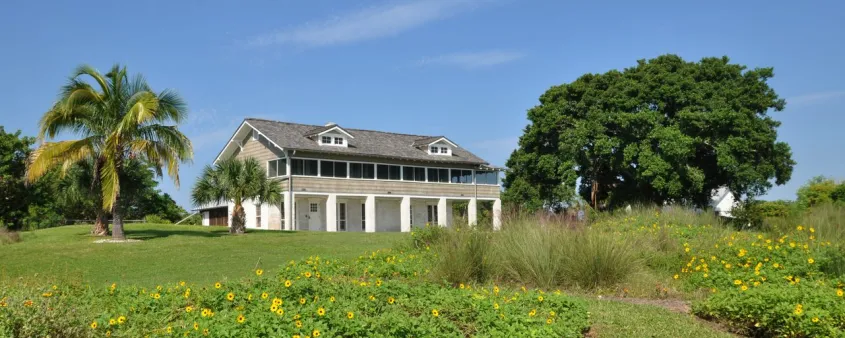
Sometimes, with its gleaming lawns and sparkling facades, it can be easy to forget that Florida is home to so much history. At the Mound House, you can experience 2,000 years of history in (and around) Fort Myers’ oldest standing structure. The immersive museum is built on top of an ancient Calusa shell mound: This mound, built by the indigenous Calusa people of southern Florida, protected the area against storm surges and also served as a lookout spot. While visitors can of course explore the museum’s rooms, which share the stories of the Calusa people. The museum also offers guided kayak tours in the surrounding waters, which give a different perspective on Florida’s natural and cultural history.
451 Connecticut St, Fort Myers Beach, FL 33931
View Website | Open in Google Maps
5. Historic Fishing Shacks
History on Stilts.
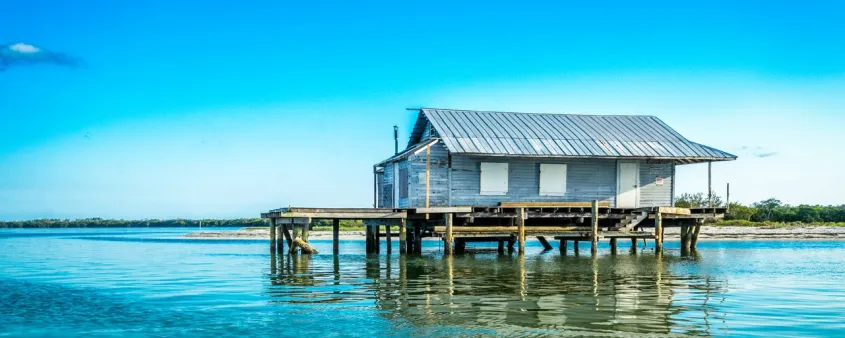
Along the shoals of Pine Island Sound sit a string of fishing shacks on stilts. These century-old shacks, which have withstood countless hurricanes, don’t have running water or electricity, but they carry the history of a once-thriving fishing industry in southern Florida. The Punta Gorda Fishing Company built the houses in the early 1900s. While some were designated as ice houses (for storing ice), others housed fishermen. Many would stay the entire summer, with the company bringing them supplies (like gas, groceries, and ice) and hauling out fish each week. Today, the best way to see them is by boat—local outfitters can take you out for an afternoon.
Pine Island Sound, Florida
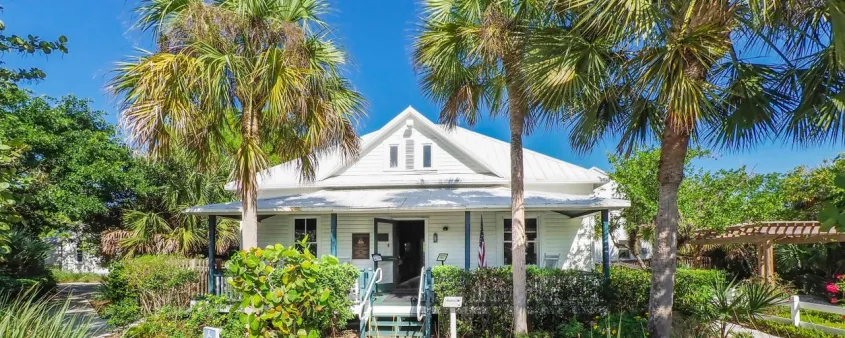
6. Sanibel Historical Village
Back in Time.
Sanibel Island has a fascinating history. Some of its earliest inhabitants were the Calusa people, who settled in the 16th century. Then came the Spanish, who gave the island its current name, possibly after Queen Isabella of Spain. The island even saw its share of pirates in the 19th Century. You can dive into all this history and more in the Sanibel Historical Museum and Village. The property is home to seven historic buildings that were relocated from their original sites, including a 1926 post office and 1927 general store. Most days, the museum offers free guided docent tours at 10:30 a.m.
950 Dunlop Rd, Sanibel, FL 33957
View Website | Open in Google Maps
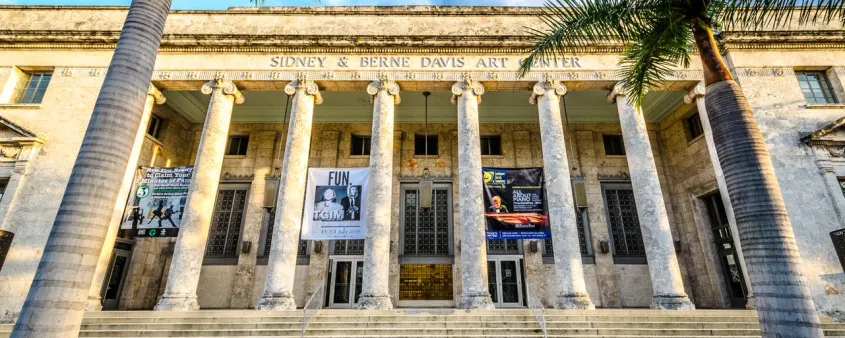
7. Sidney & Berne Davis Art Center
All Lit Up.
Florida is great at celebrating both the old and the new, and the Sidney & Berne Davis Art Center does just that. The center is housed in a restored post office from the 1900s, a stately building whose facade is dominated by a set of columns, made of limestone from the Florida Keys and designed in the Neoclassical Revival style. Each month, they exhibit a different contemporary artist in their first floor atrium, while also hosting lots of arts and cultural events. Those range from film screenings and karaoke parties to salsa and DJ nights. The center is particularly striking at night, when artist Jim Sandborn’s light sculpture projected onto the facade is most visible: On the western side of the building, it tells the story of Native Americans entering Florida; on the eastern side, it lists the Latin names of plants that Edison tested to develop a local form of Latex.
2301 First St, Fort Myers, FL 33901
View Website | Open in Google Maps
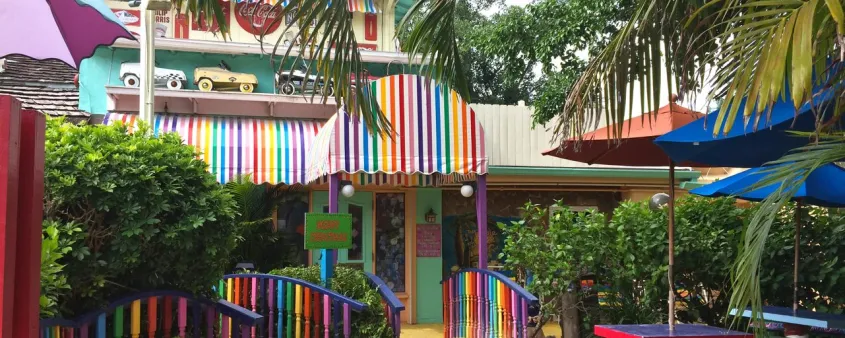
8. The Bubble Room
Go Cake Crazy.
The Bubble Room is both a technicolor dream and a Captiva Island icon. This restaurant, beloved by locals and tourists alike, actually began as a house. Joyce “Jay” McPhee lived here, and decorated every inch of it with bright, colorful paint and ephemera that ranged from Hollywood posters to Christmas ornaments and toy trains. These days, the Bubble Room is famous for that sense of whimsyandfor its ginormous slices of cake, from the famous “Orange Crunch” to a sumptuous red velvet. This is the sort of place that will make you feel like a kid again—and a type of restaurant you won’t find replicated anywhere else in the world.
15001 Captiva Dr, Captiva, FL 33924
View Website | Open in Google Maps
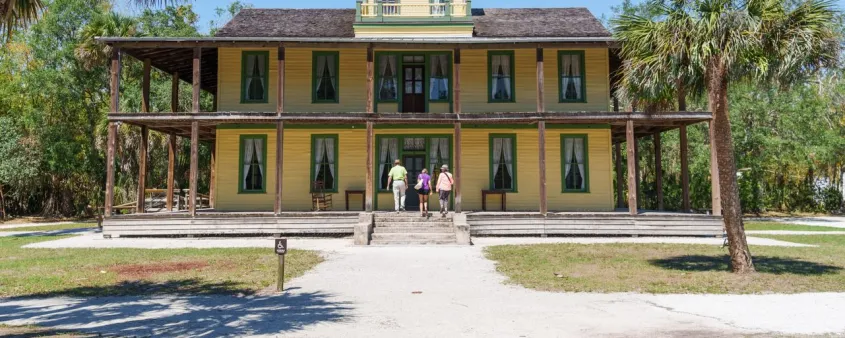
9. Koreshan State Historic Site
Utopian Dreams.
In the town of Estero, you can step back in time at Koreshan State Historic Site, a 135-acre park that was once home to a utopian community called the Koreshans. Today, the park has maintained 11 historic buildings that date back to the 19th century, plus replica buildings that give a better sense of the Koreshans’ life. Many of these buildings are simple yet beautifully made wood structures, from dwellings to an “art hall” where they held concerts. The park also abounds in natural beauty, with walking paths and plenty of flora and fauna. Here you can also spot gopher tortoises, a threatened species that proliferate in the park. And if you want to get back to nature, the park offers RV and tent camping.
3800 Corkscrew Rd, Estero, FL 33928
View Website | Open in Google Maps
This content was created collaboratively by Fort Myers - Islands, Beaches and Neighborhoods and Atlas Obscura. Written by Marian Bull.